College Is Only 3–5 Years Away: How to Protect an Education Corpus Without Giving Up Growth Too Soon
With 12 or 15 years available, parents can focus heavily on growth. With only three to five years left, capital preservation and liquidity become much more important because the spending date is largely non-negotiable.
The biggest mistake is keeping the same aggressive allocation simply because it performed well during the accumulation phase.
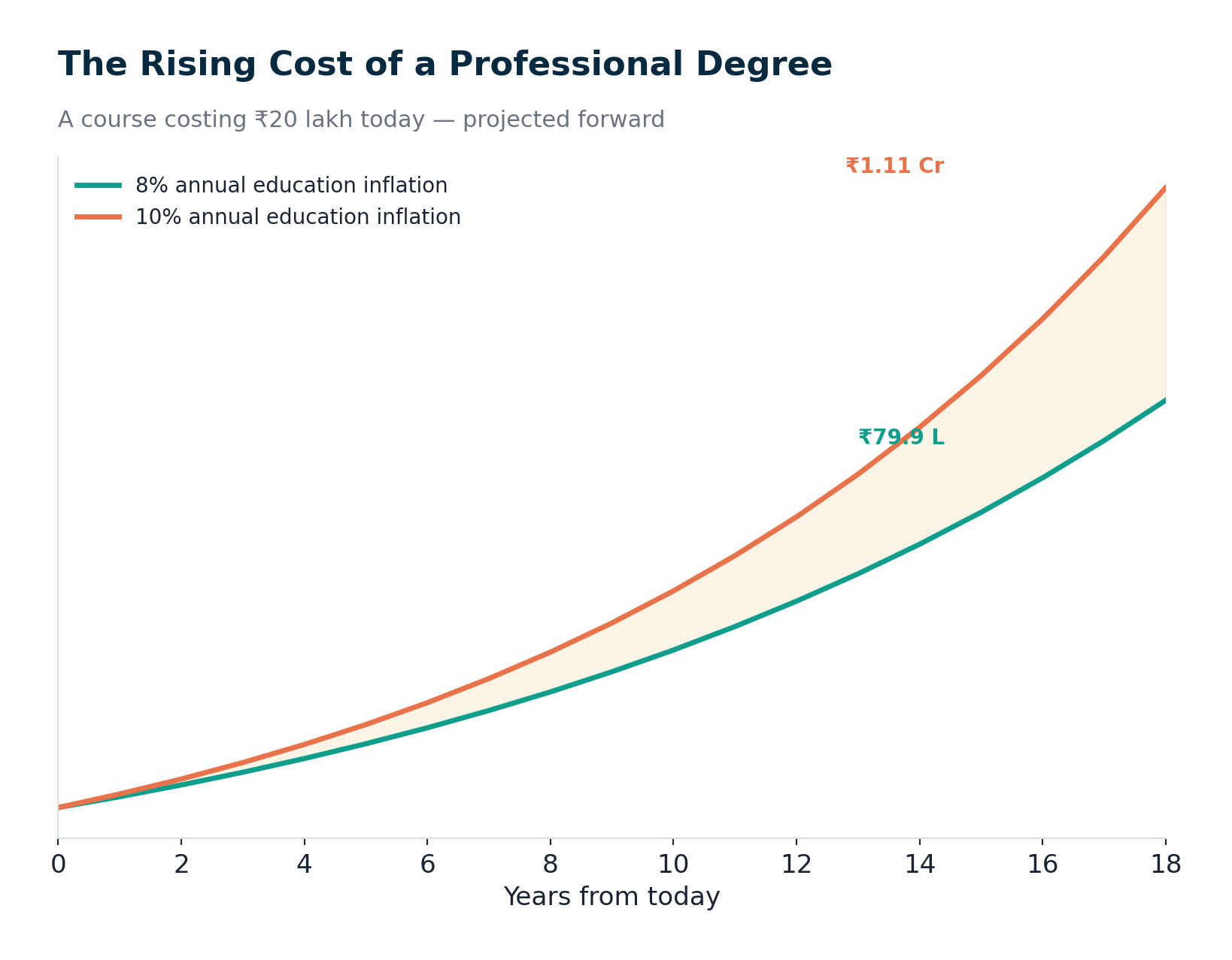
Important: Tax, FEMA, small-savings and cross-border rules can change. Figures and eligibility rules should be rechecked against current official provisions at publication and transaction time. The objective changes when the goal gets close With 12 or 15 years available, parents can focus heavily on growth. With only three to five years left, capital preservation and liquidity become much more important because the spending date is largely non-negotiable. The biggest mistake is keeping the same aggressive allocation simply because it performed well during the accumulation phase. Recalculate the goal from scratch Update the expected course, institution type, city or country, tuition, living costs and one-time expenses. Compare the new target with the current corpus and future contributions. This produces a funding gap rather than a vague feeling that 'we have been investing for years'. If the gap is large, solve it through some combination of higher saving, a revised course budget, scholarships or a planned education loan—not by taking reckless investment risk. Separate Year 1, Year 2 and later fees College expenses arrive in instalments. Create time buckets for the first admission payment, first-year fees and later-year costs. Money needed soon should not carry the same market risk as money needed four or five years later. This bucket approach creates a natural glide path rather than one dramatic switch from equity to cash. Reduce sequence risk A 25% equity decline is recoverable when a goal is 12 years away. The same decline six months before admission can permanently reduce the available college budget. This is sequence risk applied to a fixed-date goal. Gradually transfer near-term requirements to suitable lower-volatility instruments as the payment date approaches. Do not chase yield in the 'safe' bucket Parents sometimes exit equity correctly and then take credit or duration risk to earn a little extra. Money earmarked for a near-term fee has a different job: availability and stability. Evaluate credit quality, liquidity, maturity and tax treatment before yield. Keep retirement separate When an education shortfall becomes visible, parents can feel pressure to raid retirement assets. First quantify how much support is genuinely affordable without compromising the parents' own long-term security. A partial education loan can be less damaging than creating a retirement deficit that cannot later be financed. Create an admission-year cash plan List application fees, entrance coaching, deposits, travel, hostel setup, laptop, insurance and the first tuition deadline. Maintain enough accessible cash so a temporary redemption or banking delay does not jeopardise admission. For overseas education, add remittance lead time and currency conversion to the checklist. Frequently Asked Questions Should I exit all equity five years before college? Not automatically. De-risk progressively based on the amount and date of each payment and your risk capacity. What if the current corpus is below target? Increase savings, reconsider the budget, explore scholarships/loans and avoid trying to 'catch up' through concentrated bets. Where should first-year fees be kept? In instruments selected primarily for liquidity and capital stability, appropriate to the exact horizon. Can I postpone de-risking if markets are doing well? A written glide path is usually safer than letting recent returns determine the risk of a fixed-date goal. Related Reading Child Education Planning in India (/insights/child-education-planning-guide-india) Children's Funds (/insights/childrens-funds) SIP Planning Guide (/insights/sip-planning-guide-india) Disclaimer: This article is for general educational purposes only and is not personalised investment, tax, legal or regulatory advice. Rules, rates and product terms change. Readers should verify current provisions and obtain professional advice appropriate to their circumstances before acting.